CLICK HERE FOR THOUSANDS OF FREE BLOGGER TEMPLATES »

Saturday, November 29, 2008

Symbiosis relationships: Class Blog 2

A symbiosis is a close relationship between two organisms in which one organism is near, on or even inside another organism and in which at least one organism benefits. There are three different types of symbiosis relationships. These relationships are commensalism, mutualism and parasitism.

Commensalism is a form of symbiosis in which one organism benefits and the other is not harmed. An example of commensalism is a manta ray and small fish. The manta ray lets the small fish get a ride on its back. This is commensalism, because the small fish benefits by getting a ride while the manta ray isn’t harmed.


Mutualism is a form of symbiosis in which both organisms benefit. An example of mutualism is a clownfish and sea anemones. The clownfish gets protection, while the sea anemones become clean. This is mutualism, because both water animals benefit from having each other around.


Parasitism is a form of symbiosis in which one organism benefits and the other is harmed. An example of parasitism is wasp’s eggs and caterpillar. When the eggs hatch into young wasps, these young wasps burrow into the body of the caterpillar. The young wasps feed on the caterpillar’s tissues. After a month or so, the young wasps chew their way out of the dying caterpillar’s body and spin cocoons. Afterwards, the young wasps become adult wasps. This is parasitism, because the caterpillar is harmed while the young wasps benefit from feeding on the caterpillar.


I think this subject is interesting, but sad in a way. It is interesting because an array of animals can be beneficial to each other (mutualism). Plus, some animals are being humane and helping other animals (commensalism). It is also sad since an animal ends up being harmed and the other is healthy from feeding on the other (parasitism).


Some interesting facts:
1. There is another type of symbiosis relationship! It is called Mimicry. Mimicry is when one organism is imitating another to gain the benefits enjoyed by that organism. For example, a Banded snake eel mimicking a venomous sea snake in order to divert the attention of predators.


2. Parasites can be divided into two categories, Ectoparasites and Endoparasites. Ectoparasites refer to external parasites, while Endoparasites refers to internal parasites.

Saturday, November 8, 2008

Will the mammoth live again?


Wow! In a few years, we may be able to see the mammoth and the sabertooth tiger. Now that Japanese scientists have produced clones of mice that have been dead and frozen for 16 years, they are thinking that one day,they could resurrect long-extinct species, such as the mammoth. At http://www.cnn.com/2008/TECH/science/11/04/japan.mouse.clone/index.html, they write about ths new discovery. Until now, scientists have only been able to produce clones using cells from living animals. The latest research shows that scientists have overcome the obstacle that stopped them from doing further research. Researchers in Kobe, Japan used cells from mice that had been frozen for 16 years at -20 degree Celsius. The researchers followed a number of steps and were able to clone the mice. A researcher says and I quote,"This is the first time a mammal has been cloned from a sample stored at conditions reasonably close to what might be expected in permafrost". In an article published in http://abcnews.go.com/Technology/wireStory?id=6173283, the researchers have a different thought and I quote,"However, it has been suggested that the 'resurrection' of frozen extinct species (such as the woolly mammoth) is impracticable, as no live cells are available,and the genomic material that remains is inevitably degraded". Last year, Russian scientists discovered the body of a baby mammoth frozen in the Arctic Yamalo-Nenetsk region. These scientists are thinking of cloning the mammoth's cells since many of the animals are preserved in ice. Depending on the results, they will clone other extinct animals.
I think that this discovery will lead science in a different direction. I also think that if this experiment on the mammoth works,more scientists are going to start cloning other extinct animals like the sabertooth tiger and the dodo. By reading these two articles, I have learned about how you can recreate an animal. This fact makes me ponder more to learn about genetics. It is interesting to know that as technology improves, our studies and research in science progresses further. We uncover facts that we haven't been sure about, now, we are able to clear those doubts and move on.

Saturday, October 25, 2008

Energy roles: Class Blog 1


Energy Roles


An ecosystem is a unit consisting of all the living and nonliving things in a given area that interact with one another. In an ecosystem, there are special roles for organisms. An organism can be a producer, consumer or decomposer.
A producer is an organism that is able to make its own food by using a source of energy to turn simple raw materials into food. Producers are the source of all food in an ecosystem. Some examples of a producer are plants and trees. The most common source of energy for a producer is sunlight. With the process of photosynthesis, producers produce food for the consumers. Ultimately, all organisms in the ecosystem depend on producers.
A consumer is an organism that cannot make its own food. Consumers depend on producers for food and energy. There are three types of consumers: herbivores, carnivores and omnivores. Plant eaters are known as herbivores. An example of an herbivore is a grasshopper. The word “herbivore” comes from Latin word herba which means grass or herb. An example of a carnivore is a snake. The word “carnivore” comes from Latin word carnis which means flesh. Organisms that eat both plants and animals are called omnivores. The word “omnivore” comes from Latin word omnis which means all. An example of an omnivore is a human.
A decomposer is an organism that breaks down the bodies of dead organisms into simpler substances. In the process of breaking down the dead organism, they return important nutrients to the soil and water. Some examples of decomposer are molds, mushrooms and algae. Decomposers are especially important to the ecosystem because they break apart dead organisms. Decomposers return nutrients like nitrogen, carbon, sulfur and magnesium.
I think this subject is fascinating. It is really interesting how our life works. All life is interconnected with each other. What makes the subject more interesting is of where the different organisms overlap and the different places they locate to. I think the most interesting food web is the deep marine, because of the different type of species.


Some interesting facts:

1. Ecosystem actually stands for ecological systems


2. The koala bear, which only feeds on the bark and leaves of the eucalyptus tree, and the cinnabar moth caterpillars, which only eat the leaves of the ragwort plant, live in the areas where these plants grow.

Saturday, October 11, 2008

The Nobel Prize winners are.....


The Discovery of Green Fluoresant Protein(GFP)


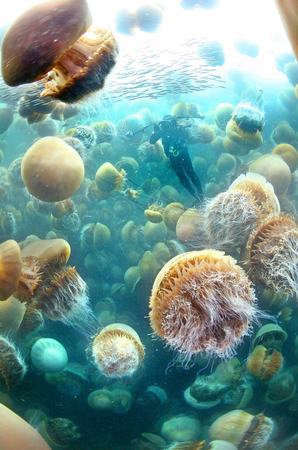
Two Americans and one Japanese won the Nobel Prize award in chemistry this year for the discovery and development of a brightly glowing protein first seen in jellyfish, which has helped scientists study how cancer cells spread. The chemists are Mr.Shimomura, Mr.Chalfie and Mr.Tsien. The green fluoresant protein, or GFP is a laboratory tool used to illuminate processes in living organisms. http://www.time.com/time/health/article/0,8599,1848177,00.html has documented the work the chemists did with the GFP.

In 1962, Mr.Shimomura was able to isolated GFP (a protein)from a jellyfish and discoverd it glowed neon green under ultraviolet light. In the 1970s, Mr.Shimomura showed that the GFP contained a chemical group that can absorb and emit light. Mr.Chalfie thought that the protein would be an excellent tool for the various activities he could do with the roundworm's cells. He and others also proved that no other proteins were needed to control the chemical production of the GFP. Mr.Tsien's work helped extend GFP's usefulness.He proved this statement by exchanging various amino acids in different parts of GFP therefore it aborbs and emits different colors including blue,cyan and yellow.

The Royal Swedish Academy of Sciences said and I quote," Chalfie showed GFP's value "as a luminous genetic tag" while Tsien contributed "to our general undestanding of how GFP fluoresces"". Since Mr.Shimomura, Mr.chalfie and Mr.Tsien produced lots of information about GFP, researchers have been able to use GFP to track nerve cell damage from Alzheimer's disease. The academy says and I quote,"In one spectacular experiment, researchers succeeded in tagging different nerve cells in the brain of a mouse with a kaleidoscope of colors."

I think that the chemists deserved the Nobel Prize award. I feel, with this new discovery, doctors can help patients with Alzheimer's and other diseases. The discovery they found out will be a development in our technology and medicine studies. I think it is amazing that scientists from all around the world are trying to find cures for diseases that were uncurable in the past.

Friday, May 23, 2008

Class Blog #2


Water Cycle


In Science, my class did an activity that visualizes the water cycle. Mrs.Nietsky(sorry if I misspelled her name) set this activity up for us to do, so we can understand the water cycle. First, Mrs.Nietsky set up 5 buckets of various sizes. Then, Mrs.Nietsky asked us some questions and explained the procedure of the activity. There were five buckets around the room. They were known as: Aquifer, Ocean, Reservoir, Plants & Animals and Streams & Rivers. Accordingly, Mrs.Nietsky gave 15 students cards. Some people took spoons(they were the people who brought water to designated place). The spoon people's job was to take some water from a designated place to another designated place. Some people took cups(these people were the clouds who took the water from the spoons. The cup people had to get water into their cups from the spoon people. They had a certain amount of water to be filled in the cup.After they did get the cup filled to the "line", they needed to pour the water into a designated place. I was a "cloud". I had to take my water and pour it into the Aquifer. In the beginning, the results showed no effects. We noticed that human influence was needed. Therefore, after about 10 minutes, we added 3 more buckets. The 3 buckets were: Industry, Residential and Agriculture. The poeple who did not have cards up til then were part of the "human influence" group. These people had to take water from one of the other 5 buckets and pour the water into one of the "human influence" buckets. This time, we had a big change in our buckets. The Aquifer, Reservoir, Plants & Animals and Streams & Rivers decreased drastically in amount of water. The Ocean didn't have too big of a change. Agriculture practically overflowed. Residential and Industry didn't overflow yet. After about 10 minutes, I switched my job with someone and continued being a spoon. This time the twist was that we have pollution in the waters. It started at Industry and got its way around all the buckets. So, after 10 minutes,the results had shown changes. The Aquifer, Reservoir, Plants & Animals and Streams & Rivers decreased drastically in amounts of water again. The Ocean decreased a little. The "human influence" buckets overflowed again! That activity was soooo much fun!
A site that talks in detail about the water cycle is http://en.wikipedia.org/wiki/Water_cycle. In the beginning, it has a description about the water cycle and description of each process involved. As you go further into the article, the resources and effects are mentioned. Also, I found another site which shows the process of the water cycle in an animated version. This site is http://earthguide.ucsd.edu/earthguide/diagrams/watercycle/index.html. This site is helpful for both teachers and students in understanding the water cycle.
My opinion on the Water Cycle Activity is that it is really fun. You are able to visualize and also DO IT! You can experience the water cycle by conducting it and being a part of it. Plus, this same cycle is happening in your life. The water cycle has an effect on humankind and animals. In the world now, human influence has made a big effect on the water cycle(pollution).This was a fun and wet experience to me.

Saturday, May 17, 2008

Arctic Tale

During the 6th grade assessment, I watched a documentary movie called "Arctic Tale". It was about the life of a polar bear called Nanu and the life of a walrus called Seela. Obviously, this movie took place in the vast snow kingdom of the Arctic Pole. It was a breath-taking movie to watch. What makes this movie cool is that it is a real-life adventure (It took about 2 years for this film to be made.... I think). An interesting fact that I learned from the movie is that male polar bears are a danger sign for a mother polar bear and cubs. Mrs. Rousseau says it is part of their way of survival. Another interesting fact that I learned is that a polar bear cub stays with his/her mother for 3 weeks and then leaves them to survive by themselves. That is also part of their survival system. Something else that is interesting is that an arctic fox would be friends with a polar bear(they never eat each other or fight, the fox is always there for the polar bear).
The website for the movie is http://www.arctictalemovie.com/ . You can find a lot of information about the movie in the website. The site has info on what equipment did they use for filming the movie. It also has the pistures of the creatures involved in the movie. The website has info on the filmmakers, too. It has a gallery, downloads and learn more tabs. It is a good website that provides info about the movie.
I also learned that each season in current year is coming earlier than the previous year. Also, the warmth of the sun is melting the ice, effecting walrus', polar bear's (Seela's and Nanu's) and other animals' survival. This change in seasons is a change to the weather and surroundings of the animals living there. My opinion on this movie is that it is outstanding and a breath-taking movie. It has live footage that children and adults can learn from. It is a way to learn how weather takes part in any animal's life. You can learn about an animal's risky life. I personally think this is a movie that you can learn a lot from.

Saturday, May 10, 2008

Extra Creit:Weather

A Line-Storm Song

The line-storm clouds fly tattered and swift.
The road is forlorn all day,
Where a myriad snowy quartz stones lift,
And the hoof-prints vanish away.

The roadside flowers, too wet for the bee,
Expend their bloom in vain.
Come over the hills and far with me,

And be my love in the rain.

The birds have less to say for themselves
In the wood-world's torn despair portrays
Than now these numberless years the elves,
Although they are no less there:
All song of the woods is crushed like some paras.
Wild, earily shattered rose.
Come, be my love in the wet woods, come,

Where the boughs rain when it blows.

There is the gale to urge behind
And bruit our singing down,
And the shallow waters aflutter with wind
From which to gather your gown.
What matter if we go clear to the west,
And come not through dry-shod?
For wilding brooch shall wet your breast
The rain-fresh goldenrod.
Oh, never this whelming east wind swells
But it seems like the sea's return
To the ancient lands where it left the shells
Before the age of the fern;
And it seems like the time when after doubt
Our love came back amain.
Oh, come forth into the storm and rout
And be my love in the rain.


Robert Frost


Explanation:
Weather words are mentioned in the poem "A Line-Storm Song"(left). Robert Frost talks about rainy weather in the poem. The poet described the weather as dismal. Robert describes that the weather is unpleasent and no one would enjoy this. The next para of the peom has the same feelings as before. The animals mentioned in the second para are feeling unpleasant and untenable of the weather. Robert Frost the second para as destroyed and shattered. The third para of "The Line - Storm Song" is different from the first two. In the third para, the poet describes the gusty winds and how the heavy downpour that comes with it.

Robert Frost is a nature- loving man. In this poem, he is describing how bad weather effects animals. Clouds, rain, wind, east winds, storms and seas are the types of weather mentioned in the poem. Gloomy and rainy weather was discussed in the poem. The poem would not be the same without the mention of weather. This poem itself is about the effects of weather. The poem would have nothing to describe. Robert Frost uses deep description with adjectives. The poet used figurative language such as metaphors and rhymes. He also used imagery and mood. The poem "A Line- Storm Song" did not further my knowledge about weather.